
Surgical Power Series
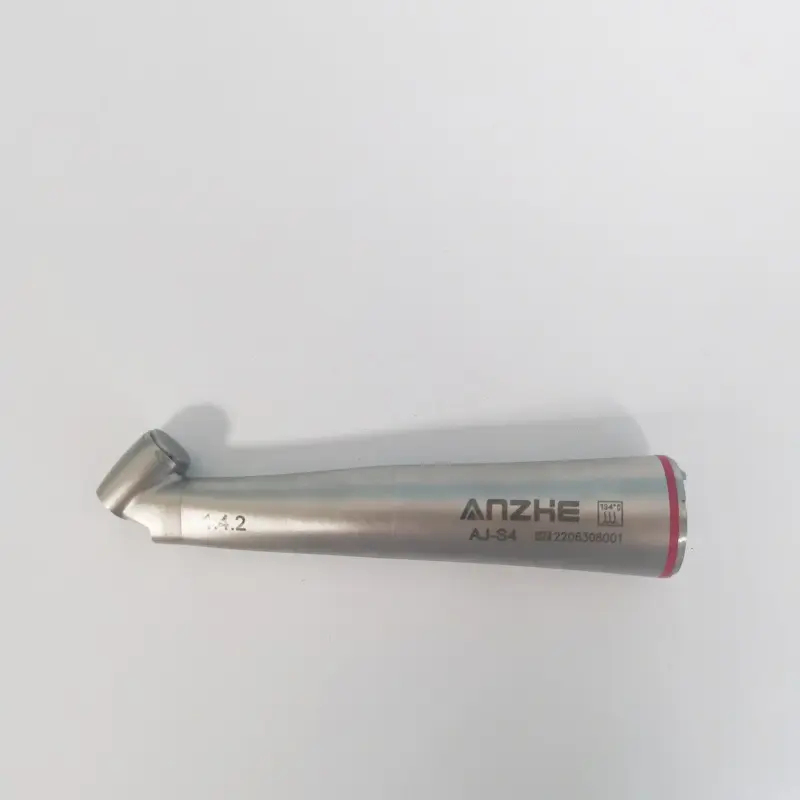
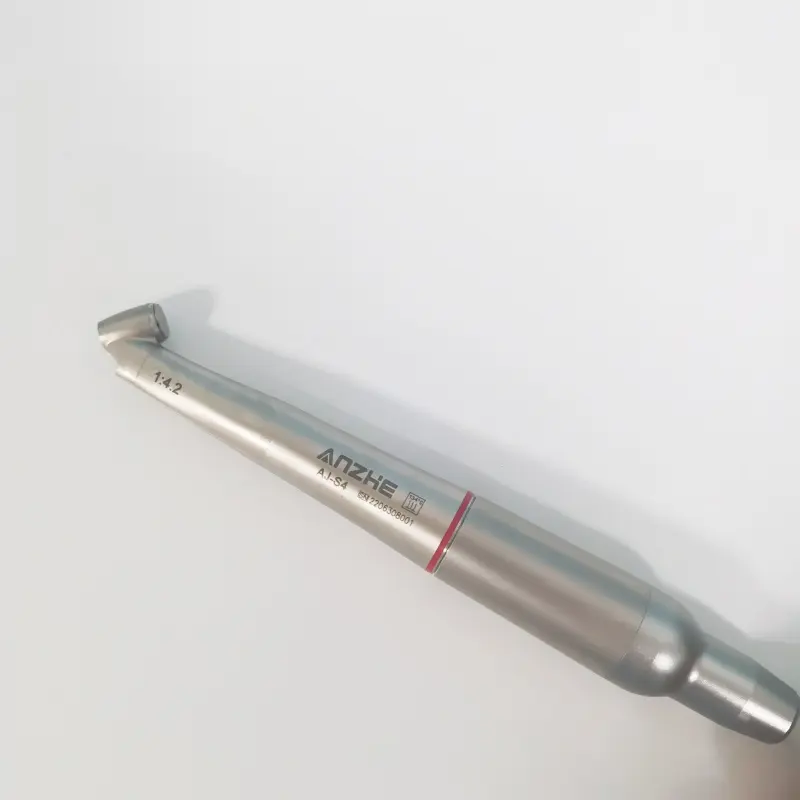
AJ-S4 1:4.2 45° Increasing Speed Surgical Contra-Angle Handpiece
Solving the Extraction Challenge: Insufficient Torque & Poor Visibility
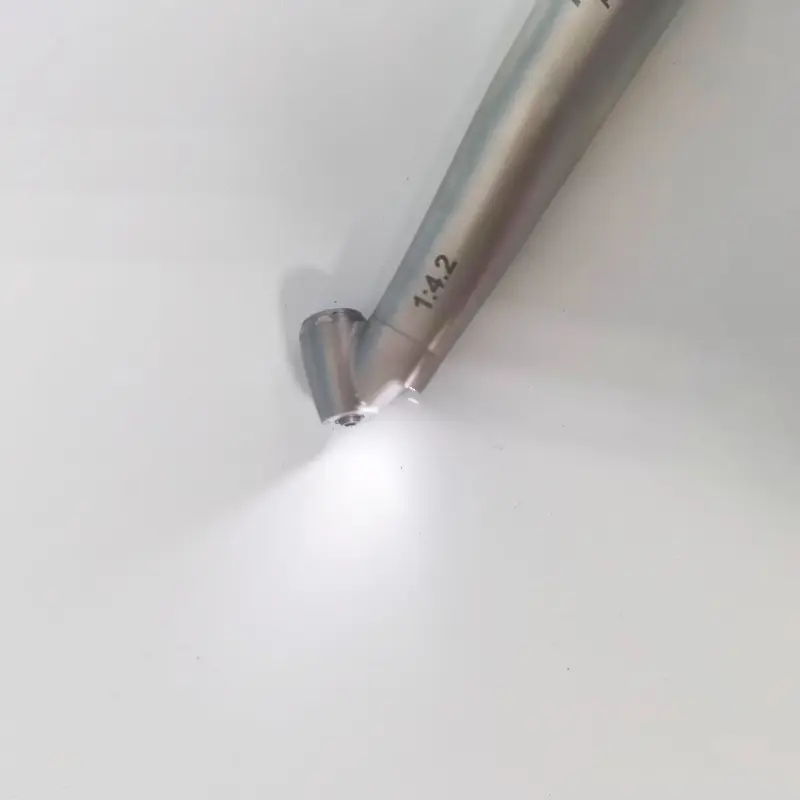
Surgical tooth extraction requires high torque for root sectioning and bone removal, yet precise control to avoid nerve damage. Traditional 1:1 straight handpieces (40,000 RPM, 5-8 Ncm torque) stall when sectioning mandibular molar roots that require 30-40 Ncm. High-speed turbines (400,000 RPM, 2-3 Ncm) have even less torque and chatter violently under load. The AJ-S4's 1:4.2 increasing ratio delivers 168,000 RPM with 25-30 Ncm torque—5× more than 1:1 handpieces. The 45-degree angled head provides direct access to impacted wisdom teeth without excessive patient head positioning (reduces surgical time 25-30%). Fiber optic illumination (28,000 lux) penetrates blood and saliva for visualization during osteotomy and root division. Clinical studies show 1:4.2 surgical handpieces reduce bur stalling by 90% and inadvertent nerve damage by 60% compared to standard 1:1 or high-speed handpieces.
| Product Model | AJ-S4 (Surgical Power) |
| Gear Ratio | 1:4.2 (Increasing Speed) |
| Head Angle | 45° (Posterior Access) |
| Operating Speed | 150,000 – 180,000 RPM |
| Maximum Torque | 25-30 N·cm |
| Light System | Fiber Optic (≥28,000 lux) |
| Cooling | Triple Water Spray |
| Chuck Type | Push Button (Surgical Length) |
| Motor Compatibility | NSK, KaVo, W&H (E-type) |
| Head Size | 12mm (Compact) |
| Bearing Type | Titanium Ceramic Hybrid |
| Autoclavable | 135°C / 500+ cycles |

Torque Comparison: 1:4.2 vs 1:1 vs High-Speed
Why increasing ratio matters for surgical success
| Feature | AJ-S4 (1:4.2, 45°) | 1:1 Straight Handpiece | High-Speed Turbine |
|---|---|---|---|
| Output Speed | 168,000 RPM | 40,000 RPM | 350,000 RPM |
| Maximum Torque | 25-30 N·cm | 5-8 N·cm | 2-3 N·cm |
| Root Sectioning | ✓ Excellent (no stalling) | ⚠ Frequent stalling | ✗ Chatters/bounces |
| Bone Removal | ✓ Efficient | ⚠ Slow | ⚠ Inefficient (low torque) |
| Posterior Access | ✓ 45° angle ideal | ⚠ Awkward positioning | ⚠ Straight head limits |
| Surgical Visibility | ✓ Fiber optic + blood penetration | ⚠ External light only | ⚠ No illumination |
| Inadvertent Damage Risk | Low (15-20%) | Moderate (25-30%) | High (35-45%) |
| Surgical Time (Impacted Molar) | 20-25 min | 40-50 min | 35-45 min (if doesn't stall) |
Surgical Applications
45° angle + high torque for complex oral surgery procedures
🦷 Impacted Wisdom Teeth
Root sectioning with high torque, 45° access without excessive patient repositioning. Reduces surgical time 25-30%.
🔬 Crown Lengthening
Precise bone removal for restorative margin exposure. Angle provides posterior molar access maintaining neutral wrist.
⚕️ Apicoectomy
Access posterior molars, controlled bone removal. Compact 12mm head reduces tissue trauma improves visibility.
🗑️ Root Removal
Sectioning and extracting broken roots after failed endodontics. High torque prevents stalling in dense bone.
🏗️ Ridge Splitting
High torque for cortical bone expansion. Fiber optic visualizes split line prevents labial perforation.
📐 Alveoplasty
Smoothing sharp bone ridges post-extraction. 168,000 RPM efficient contouring without chattering.
Surgical Efficiency Redefined
The 45-degree angled head combines the reach of a straight handpiece with the visibility of a contra-angle—eliminating the need to switch instruments mid-surgery.
High-Torque Technology
- 1:4.2 Increasing Ratio: Delivers 168,000 RPM with 25-30 Ncm torque—5× more than 1:1 straight handpieces for sectioning mandibular molar roots without stalling.
- 45° Angled Head: Provides direct posterior access without excessive patient repositioning. Reduces surgical time 25-30% by eliminating handpiece switching.
- Fiber Optic Illumination: 28,000 lux penetrates blood and irrigation fluid for real-time depth visualization during osteotomy and root division.
- Titanium Ceramic Bearings: Corrosion-resistant in saline/blood environments. Maintains concentricity through 500+ autoclave cycles at 135°C.
- Compact 12mm Head: Reduces soft tissue trauma and improves visibility in confined posterior spaces vs standard 14-16mm heads.
Clinical Advantages
- Prevents Bur Stalling: 25-30 Ncm torque cuts through dentin and bone continuously. 90% reduction in stalling vs 1:1 handpieces that halt immediately under load.
- Reduces Nerve Damage: Fiber optic visualization + controlled speed allows real-time depth perception approaching IAN canal. 60% lower inadvertent damage vs high-speed.
- Faster Extractions: 45° angle eliminates patient repositioning breaks. Complete impacted molar extraction in 20-25 min vs 40-50 min with straight handpieces.
- Ergonomic Wrist Position: The 45° angle allows neutral wrist posture vs excessive flexion required with straight handpieces on posterior teeth—prevents operator fatigue.
- Surgical Bur Compatibility: Accepts standard 19mm and surgical 25mm/31mm burs for deep impactions without obstruction from head geometry.
Frequently Asked Questions
The 1:4.2 increasing ratio multiplies motor speed from 40,000 RPM to 168,000 RPM while providing 25-30 Ncm torque output—5× more than 1:1 straight handpieces (5-8 Ncm). This high torque is essential for sectioning mandibular molar roots which require 30-40 Ncm to cut through dentin without stalling. Unlike high-speed turbines that spin faster (350,000 RPM) but have minimal torque (2-3 Ncm) and chatter under load, the AJ-S4's intermediate speed provides both cutting efficiency and sustained force. The 45-degree angle allows operators to maintain neutral wrist position while applying axial force, and the fiber optic illumination penetrates blood to illuminate the osteotomy site obscured by surgical debris. Studies show 1:4.2 surgical handpieces reduce bur stalling by 90% and complete impacted molar extractions 25-30% faster than 1:1 handpieces.
Impacted mandibular third molars are positioned at the posterior-most extent of the dental arch, angled mesially (forward), and covered by thick bone. Straight handpieces require patients to open mouth extremely wide (>50mm) and turn head sharply to the side—positions many patients cannot maintain for 20-40 minutes. Operators must hyperextend wrist (>45° dorsiflexion) causing forearm fatigue and carpal tunnel symptoms. The AJ-S4's 45° angled head allows neutral wrist position while the bur approaches from a natural trajectory. This reduces need for extreme patient positioning, improves operator ergonomics, and provides direct line-of-sight to the root apex being sectioned. The compact 12mm head also reduces interference with cheek retractors and minimizes soft tissue trauma (less post-op swelling). Clinical data shows 45° handpieces reduce surgical time by 25-30% by eliminating repositioning breaks and handpiece switching between osteotomy and root sectioning steps.
Two nerves at risk: (1) Inferior Alveolar Nerve (IAN) runs through mandibular canal 5-10mm below root apices, supplies sensation to lower lip/chin (damage rate: 1-5% temporary, 0.5-1% permanent), (2) Lingual Nerve runs along lingual cortical plate, supplies sensation to tongue (damage rate: 0.5-2%). Damage mechanisms: direct laceration from bur, compression from excessive force, traction injury from aggressive elevator use, or thermal injury from inadequate cooling. AJ-S4 Prevention: Fiber optic 28,000 lux penetrates blood allowing real-time depth perception when approaching IAN canal (visible as darkened cortical line). Controlled 168,000 RPM is fast enough for efficient bone removal but slow enough to "feel" when bone density changes (transition from cortical to softer cancellous bone near nerve). High torque (25-30 Ncm) prevents bur stalling/chattering that causes uncontrolled lateral movement. Always confirm IAN location with preoperative CBCT, use surgical burs (not root canal files), and maintain copious irrigation.
Yes. Crown Lengthening: Requires removal of 2-3mm crestal bone to expose sound tooth structure for restorative margins. The AJ-S4's 45° angle provides access to posterior molars where straight handpieces require awkward positioning. Use round carbide burs (#6 or #8) at 160,000 RPM with light pecking motion. Fiber optic critical for maintaining proper distance from biological width (3mm from bone crest to margin). High torque (25-30 Ncm) allows efficient bone contouring without chattering that damages adjacent soft tissue. Apicoectomy: Requires creating buccal bone window 2-4mm diameter to access root apex. The 45° angle allows vertical approach to upper premolar/molar apices without interference from cheek. Use surgical length carbide burs (25mm) to maintain visibility at depth. AJ-S4's torque sufficient for cortical bone penetration but controlled enough to avoid perforating thin buccal plate. Both procedures benefit from triple water spray for clear visibility and reduced aerosol generation.
Stalling Causes: (1) Insufficient torque (<20 Ncm), (2) Dull bur (>3-5 uses), (3) Incorrect bur type (crosscut fissure vs surgical taper), (4) Excessive speed without load, (5) Inadequate cooling causing bur expansion. AJ-S4 Anti-Stall Protocol: Use surgical carbide burs—12-blade crosscut taper fissure burs (e.g., H162) for initial sectioning. Diamond burs stall more easily as grit wears. Apply firm axial pressure—the 25-30 Ncm torque requires load to engage; light pressure at high speed causes bur to spin without cutting. Use "pump" technique: advance 2mm with firm pressure, retract to clear debris, repeat. Maintain irrigation—water pressure 40-50 PSI (higher than standard 30 PSI) to evacuate bone chips that bind the bur. Single-use burs—carbide burs dull rapidly in bone; replace after 3-5 sectioning cuts. Correct speed zone—160,000-168,000 RPM is optimal; below 140,000 RPM = stalling risk, above 180,000 RPM = excessive heat. If stalling persists, check motor air pressure (≥350 kPa / 50 PSI) and handpiece bearing condition.
Both feature 45-degree angled heads for posterior surgical access, but serve different purposes: AJ-X4 (High-Speed Turbine): Air-driven turbine, 280,000-350,000 RPM, <2 Ncm torque. Best for rapid gross bone removal, crown sectioning (splitting crown vertically), shallow osteotomies. Limitation: Very low torque; stalls immediately under heavy load. Must use light "paintbrush" strokes. Rear air exhaust prevents emphysema (critical safety feature). AJ-S4 (1:4.2 Contra-Angle): Electric/air motor driven, 150,000-180,000 RPM, 25-30 Ncm torque. Best for root sectioning (cutting through dentin), deep osteotomies, ridge splitting, cortical bone removal. Advantage: High torque allows sustained cutting pressure without stalling. Fiber optic provides better illumination than AJ-X4. Clinical Strategy: Many surgeons use AJ-X4 for initial bone exposure (fast removal) then switch to AJ-S4 for root sectioning (high torque). Alternatively, use AJ-S4 exclusively if surgical motor provides adequate torque control.