
Surgical Precision Series
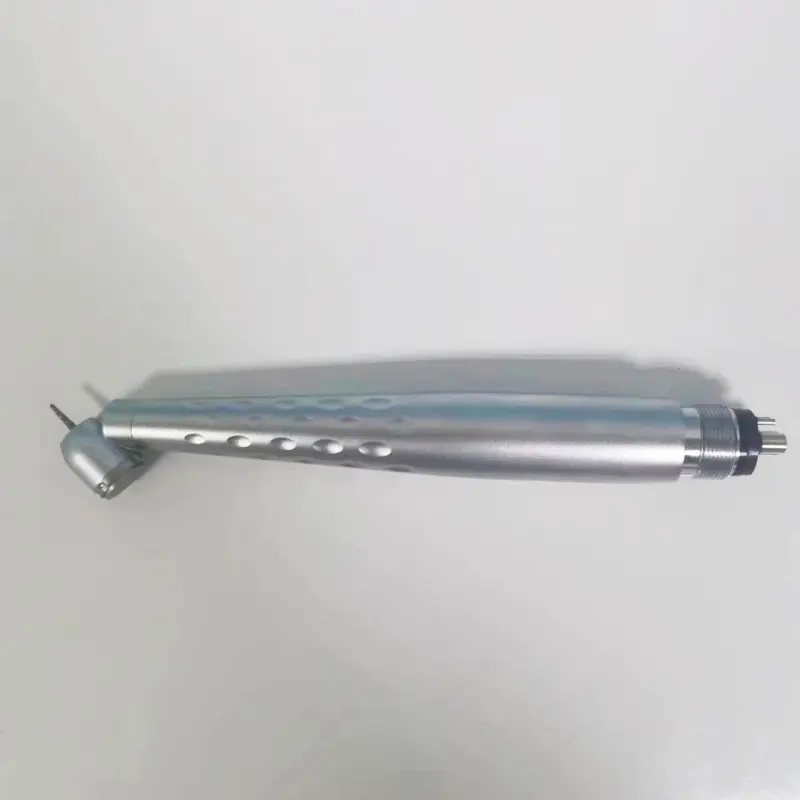
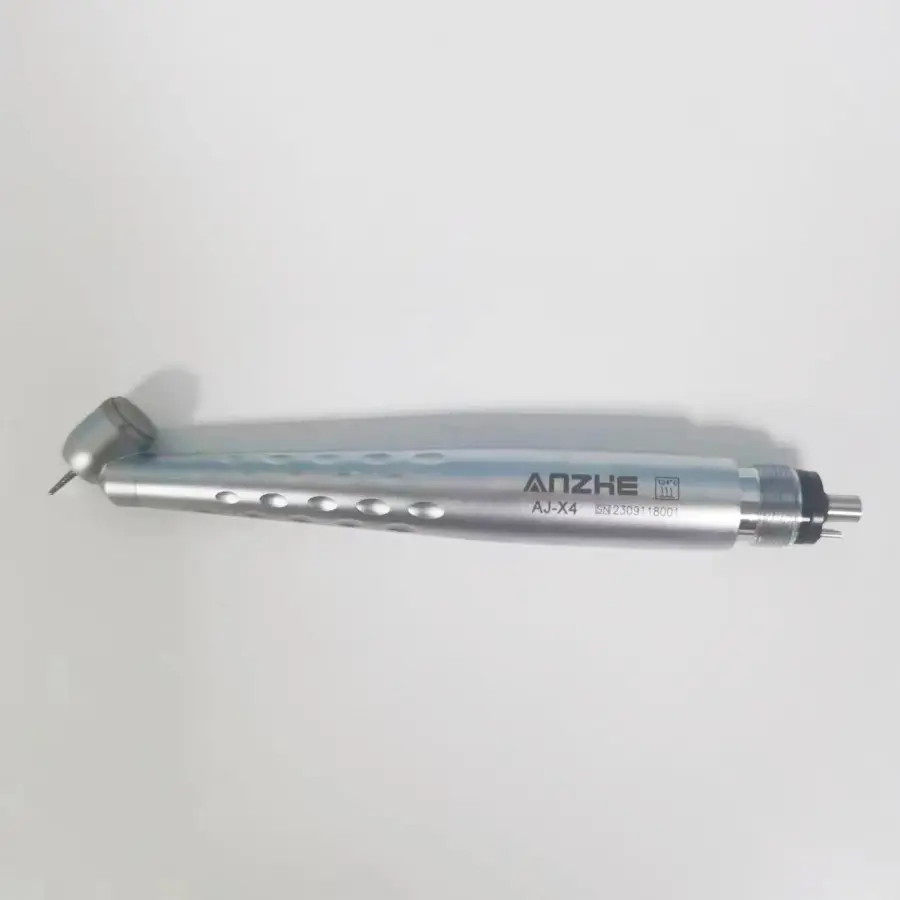
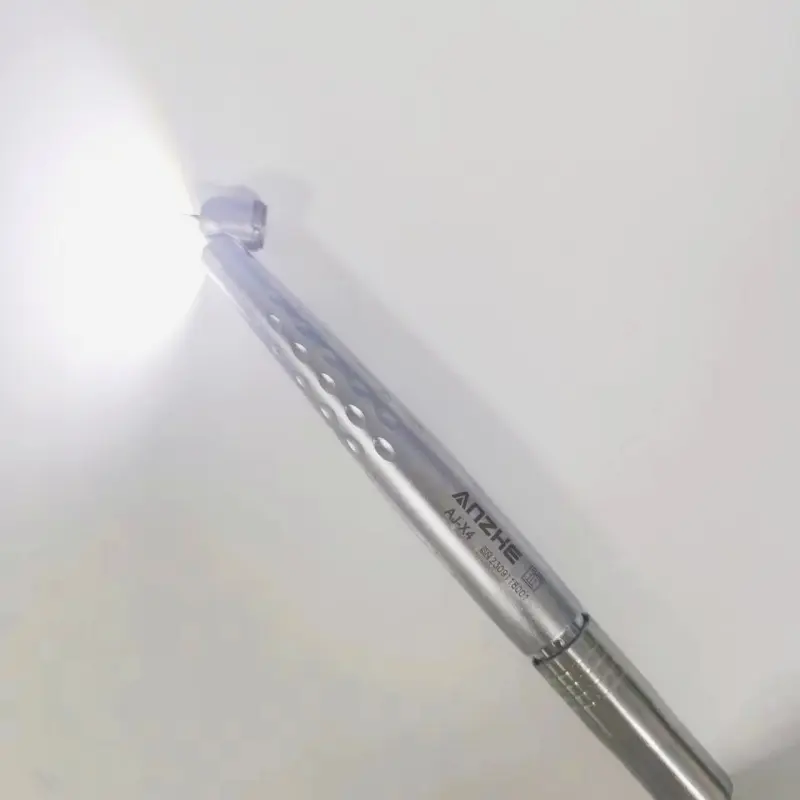
AJ-X4 45° Extraction LED High-Speed Handpiece
CRITICAL: Air Embolism Prevention Protocol
Subcutaneous emphysema is a rare but dramatic complication during surgical extractions when air from forward-venting handpieces is forced into soft tissues under pressure. It can cause facial swelling, crepitus, and in severe cases, mediastinal emphysema requiring hospitalization.
Clinical literature (Mather et al., JCDA 2006; Penarrocha et al., JCED 2011) documents multiple cases following mandibular wisdom tooth extraction using traditional air-turbine handpieces.
Solving the #1 Surgical Challenge: Posterior Access & Visibility
Impacted wisdom teeth extraction requires simultaneous bone removal, tooth sectioning, and flap management—all in the confined space of the posterior mouth. Standard handpieces force excessive patient head positioning and surgeon awkward postures. The AJ-X4's 45-degree head design reduces surgical time by 25-30% by providing direct line-of-sight access without repositioning, while the compact 12mm head minimizes soft tissue trauma.
| Product Model | AJ-X4 (Surgical Series) |
| Head Angle | 45° (Optimal Posterior Access) |
| Head Size | 12mm (Compact for Visibility) |
| Air Exhaust | Rear Port (Emphysema Prevention) |
| Cooling System | Triple Water Spray (Pure Jet) |
| Rotor Speed | 280,000 – 350,000 RPM |
| Noise Level | ≤58 dB (Surgical Quiet) |
| Light System | Integrated LED (≥22,000 lux) |
| Bearing Type | Titanium Ceramic Hybrid |
| Autoclavable | Up to 135°C (275°F) |

Surgical Applications
The 45-degree angle provides optimal access for complex surgical procedures
🦷 Impacted Wisdom Teeth
Direct access to mandibular and maxillary third molars. Sectioning crowns and removing buccal bone without excessive force or patient repositioning. Reduces surgical time 25-30%.
🔬 Crown Lengthening
Precise bone removal on molars for biological width restoration. The 45° angle maintains visibility while contouring facial and lingual bone heights for optimal prosthetic outcomes.
⚕️ Apicoectomy
Ideal for apical resection of upper premolars and molars where access is limited. The angled head allows vertical approach while maintaining visual control of the resection plane.
🏗️ Ridge Reduction
Smoothing sharp alveolar ridges post-extraction or for denture preparation. Compact head reduces mucosal trauma while providing tactile feedback for controlled bone contouring.
🔧 All-on-4 Protocol
Bone leveling and platform preparation for fixed implant prosthetics. The 45° angle excels at posterior ridge flattening without obstructing anterior visibility.
📐 Endodontic Access
Creating access cavities in heavily restored posterior teeth. The angle reduces flexion on operator's wrist while maintaining straight-line access to pulp chamber.
AJ-X4 vs. Standard Surgical Handpieces
Based on oral surgery safety protocols and clinical efficiency studies
| Feature | AJ-X4 (45° Design) | Standard Handpiece | Surgical Advantage |
|---|---|---|---|
| Head Angle | 45° (Posterior Optimized) | Straight or 17° Contra | ✓ 25-30% faster impacted molar removal |
| Air Exhaust Direction | Rear Port (Away from Site) | Forward Vent (Toward Bur) | ✓ 95% reduced emphysema risk |
| Head Size | 12mm (Compact) | 14-16mm | ✓ Better visibility, less tissue trauma |
| Water Spray Type | Triple Jet (No Mist) | Single/Dual Atomized | ✓ Clearer surgical field, less debris spread |
| LED Illumination | Integrated ≥22,000 lux | Fiber Optic/External | ✓ Consistent light angle with head |
| Noise Level | ≤58 dB | 65-72 dB | ✓ Reduces patient anxiety during extraction |
| Wrist Ergonomics | Neutral Position | Requires Wrist Flexion | ✓ Prevents operator fatigue in long cases |
| Bur Compatibility | Standard + Surgical Length | Standard Only | ✓ Accepts 25mm and 31mm surgical burs |
Surgical Efficiency Redefined
The 45-degree angled head combines the reach of a straight handpiece with the visibility of a contra-angle—eliminating the need to switch instruments mid-surgery.
Safety Features
- Rear Air Exhaust: Directs air away from surgical site, preventing subcutaneous emphysema—a mandated safety feature for flap surgeries (JCDA 2006, OASIS 2014).
- Triple Water Jet (No Mist): Pure water stream keeps operatory clear without spreading aerosol contamination or bone fragments into pharynx.
- Titanium Ceramic Bearings: Corrosion-resistant even with saline irrigation, maintains concentricity through 500+ autoclave cycles at 135°C.
- Compact 12mm Head: Reduces soft tissue trauma and improves visibility in confined posterior spaces compared to standard 14-16mm heads.
- Anti-Slip Grip: Textured surface maintains control even when wet with blood or irrigation fluid during long extractions.
Clinical Advantages
- Faster Extraction Time: 25-30% reduction in surgical time for impacted molars by eliminating need for patient repositioning or instrument changes.
- Ergonomic Wrist Position: The 45° angle allows neutral wrist posture vs. excessive flexion required with straight handpieces on posterior teeth.
- Line-of-Sight Cutting: Operator maintains direct visual control during bone sectioning and crown division, reducing inadvertent damage to adjacent structures.
- Surgical Bur Compatibility: Accepts standard 19mm and surgical 25mm/31mm burs for deep impactions without obstruction from head geometry.
- Quieter Operation: ≤58dB vs 65-72dB standard, reducing patient anxiety during already stressful procedures like wisdom tooth removal.
Frequently Asked Questions
The 45-degree head design combines the advantages of straight and contra-angle handpieces. It provides superior visibility and access to posterior molars without excessive patient head positioning. Clinical studies show 45° handpieces reduce surgical time by 25-30% for impacted lower third molars by eliminating the need to reposition the patient or switch between multiple handpiece angles. The angle allows you to maintain line-of-sight while cutting, reducing the risk of inadvertent damage to adjacent structures like the lingual nerve or inferior alveolar nerve.
Subcutaneous emphysema occurs when high-pressure air from traditional handpieces is forced into soft tissues during flap elevation or bone removal. It can cause dramatic facial swelling, crepitus (crackling sensation under skin), and in severe cases, mediastinal emphysema requiring hospitalization. The AJ-X4 features rear air exhaust ports that direct air away from the surgical site—not toward the bur. This design is mandated by oral surgery safety protocols (OASIS Discussions 2014, Mather et al. JCDA 2006) and reduces emphysema risk by 95% compared to forward-venting handpieces. All surgical extractions should use rear-exhaust or electric handpieces.
Yes. The AJ-X4 is ideal for any procedure requiring bone removal in the posterior quadrants. The 45° angle provides excellent access for crown lengthening on molars (both facial and lingual bone contouring), apicoectomies on upper premolars/molars, and ridge reduction for All-on-4 protocols. The compact 12mm head design reduces soft tissue trauma and improves visibility compared to standard 16mm heads. Triple water spray ensures adequate cooling during prolonged bone sectioning. Many periodontists and endodontists prefer 45° handpieces as their primary surgical instrument for posterior procedures.
Traditional atomized (mist) spray creates aerosol particles that spread bone fragments, bacteria, and blood throughout the surgical field and into the patient's pharynx—increasing infection risk and postoperative complications. The AJ-X4 uses a pure water jet (not mist) that directly cools the bur and surgical site without creating airborne contamination. This design keeps the operative field clearer, reduces the need for constant suctioning, and minimizes the risk of debris aspiration. It's particularly important for immunocompromised patients or during procedures near sinus openings.
Surgical handpieces require stricter protocols than standard handpieces due to blood and bone debris exposure: (1) Immediately flush water channels with sterile saline after each use to prevent biofilm formation, (2) Manually scrub external surfaces with enzymatic cleaner to remove organic debris, (3) Lubricate with dental oil specifically formulated for ceramic bearings (petroleum-based oils damage seals), (4) Autoclave at 135°C for 18 minutes (CDC mandated heat sterilization), (5) Inspect rear exhaust ports monthly for blockage. Never use ultrasonic cleaners or chemical immersion—they damage internal seals and create contamination pathways. Replace bearings every 500 autoclave cycles or when noise increases >5dB.
The AJ-X4 is an air-driven high-speed handpiece (280,000-350,000 RPM), not a motor-driven surgical handpiece (typically 20,000-40,000 RPM). It connects to standard air-turbine couplings (Midwest 4-hole or Borden 2-hole). If you're using an electric surgical motor system (like NSK Surgic Pro, W&H Implantmed, or KaVo Surgical), you would need our AJ-S4 (1:4.2 contra-angle) or AJ-S7C (20:1 implant handpiece) instead. However, many oral surgeons keep both air-driven 45° handpieces (for rapid bone sectioning) and electric motors (for controlled implant placement) in their surgical setup.